
Safety and basic installation
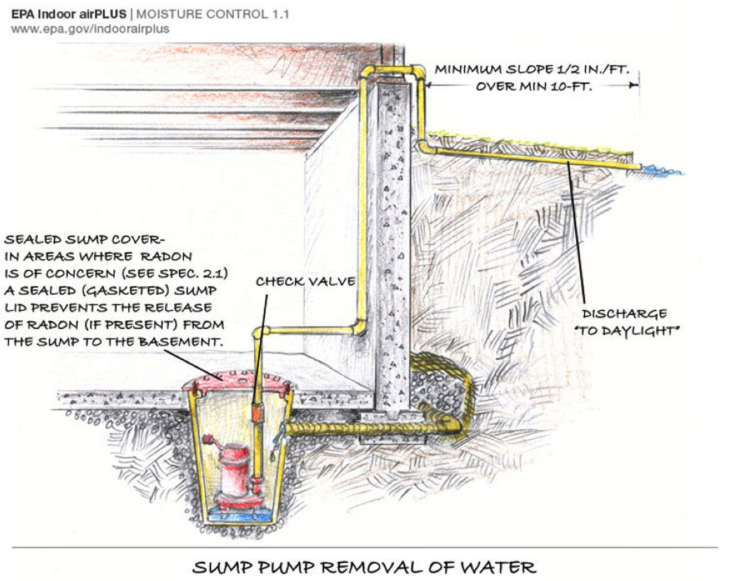
- Missing, loose, or non‑sealed pit cover, especially where there are kids, pets, radon systems, or potential for odors/humidity migration.
- Pump not GFCI‑protected where required by local practice and proximity to damp areas.
- Power feed via extension cord, multi‑tap adapter, or overloaded circuit rather than a dedicated receptacle.
- Sump pit too small or too shallow to be consistent with manufacturer/InterNACHI guidance (around 18″ diameter and 24″ depth as a rule of thumb).
Pump, float and operation
- Pump does not run when float is raised or when water is added to the pit, or runs but does not move water from the basin.
- Stuck, obstructed, or poorly located float that can jam against pit wall, discharge pipe, or pump body.
- Short‑cycling or continuous running (oversized inflow, undersized pump, failed check valve, or discharge restriction).
- Excessive noise, vibration, or visible rust/corrosion on housing or discharge riser indicating wear or impending failure.
Check valve and discharge piping
- Missing or failed check valve on discharge riser, allowing water to fall back into the pit when the pump shuts off.
- Undersized, kinked, or improperly supported discharge piping.
- No “weep”/air‑relief hole in discharge riser when required by the pump manufacturer (but note that a small hole above the pump is usually intentional, not a defect).
- Leaking unions, loose clamps, or visibly damaged piping or fittings.
Discharge termination
- Discharge terminating too close to the foundation (commonly less than about 10–20 feet) or at/downspout splash blocks that drain back toward the home.
- Discharge onto walkways or driveways where icing is likely.
- Discharge into the sanitary sewer where prohibited by local code or utility rules.
Pit conditions and moisture management
- Pit full of debris, silt, construction scraps, or organic material that can clog the pump intake or jam the float.
- Standing water around the exterior of the pit or evident seepage at slab joints nearby suggesting system is underperforming.
- High moisture readings, efflorescence, corrosion, or visible microbial growth in the sump area despite a present pump.
Redundancy and backup
- No backup power source (battery or generator) in areas with frequent outages or for homes with a known high water table.
- Inoperative or missing secondary/backup pump where one is installed or clearly needed by conditions.