
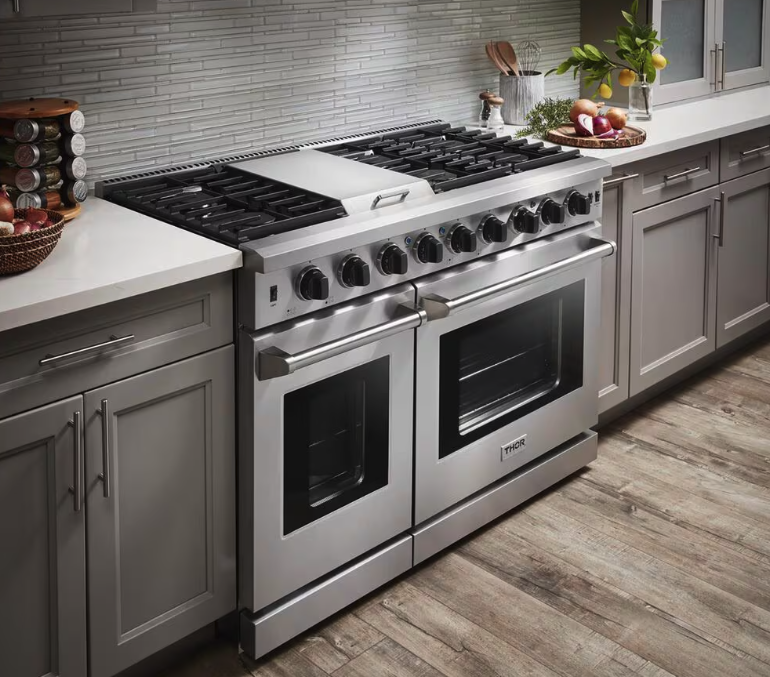
When inspecting kitchen ranges in a home inspection context, focus on safety, basic operation, and installation rather than performing a detailed appliance service check.
Scope and standards
- Many SOPs (InterNACHI, ASHI) do not require appliance inspection at all, or only require operating installed ranges with normal controls, so your range check is typically an “above SOP” value‑add unless your state SOP mandates it.
- Some states (e.g., NC) specifically require inspectors to operate ranges, cooktops, and permanently installed ovens and verify basic functions.
Core safety items
- Verify presence and effectiveness of an anti‑tip device on free‑standing or slide‑in ranges; gently try to tip the range a few inches with burners off and items removed, stopping if it moves freely (report missing/ineffective as a safety defect).
- Look for proper clearance to combustibles around the range and oven, including cabinets and finishes, per typical manufacturer requirements (often addressed in appliance‑inspection guidance).
- Confirm a readily accessible gas shutoff for gas ranges and that no rigid gas line is stressed or kinked when the range is in place or moved slightly.
Basic operation and function
- Operate all surface burners with normal controls; for gas, observe ignition and flame pattern/color (generally stable blue flame is expected; yellow, lifting, or delayed ignition are defects to note and refer out).
- Operate the oven in at least one mode (bake) long enough to demonstrate that it heats; detailed thermostat calibration is outside a typical home inspection unless you contract for enhanced appliance testing.
- Check visible door gasket, hinges, and latch, and report damaged, loose, or non‑closing doors as defects because they affect function and safety.
Installation and electrical/gas
- For electric units, confirm a secured 240‑volt receptacle or hard‑wired connection where visible, and note loose boxes, damaged cords, or clear signs of overheating as significant defects.
- For gas ranges, look for leakage indicators (odor, hissing, damaged piping) and call out any suspected leak as an immediate safety concern needing prompt qualified evaluation.
- Verify that the range is reasonably level and stable, since excessive tilt can affect combustion, cooking performance, and safety.
Reporting and limitations
- Clearly state in your report whether appliance checks are limited to operating installed units with normal controls and that you do not determine life expectancy, full temperature accuracy, or manufacturer‑specific compliance.
- If you go beyond SOP, you can borrow structure from appliance‑inspection checklists and courses to standardize how you note inoperative units, unsafe installations, and missing safety devices like anti‑tip brackets.