
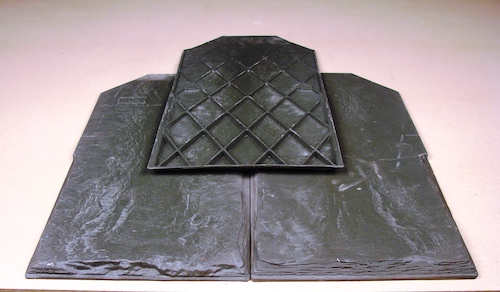
Composite slate roofing (often called synthetic or faux slate) is a man‑made roofing product designed to look like natural slate tiles but made from blended materials such as plastics, rubber, polymers, asphalt, or fiberglass. Manufacturers mold and color these tiles to imitate the texture, shape, and color variations of real quarried slate while being much lighter and easier to install.
Key characteristics
Materials: Typically blends of recycled plastics, rubber, polymers, and sometimes asphalt or other composites.
Appearance: Formed to look like natural slate, including surface texture and irregular edges, so from the ground it usually reads as a slate roof.
Weight: Much lighter than real slate, so it can usually be installed on standard roof framing without the structural upgrades that true slate often requires.
Durability: Many products advertised in the 30–50‑year service‑life range and long manufacturer warranties. Realistically, it has not been on the market long enough to develop a realistic lifespan expectancy.
Cost and installation: Generally cheaper and less labor‑intensive than natural slate, though more expensive than basic asphalt shingles.
Why people use it
Homeowners choose composite slate when they want the look of real slate but:
Don’t want the cost and installation complexity of quarried stone.
Have framing that can’t handle true slate weight.
Want lower maintenance and better impact resistance than many natural slate installations provide.
Typical Failure Modes
Curling:
A few of the thinner slates will curl if they're not pre-bent when they're installed. This can sometimes be corrected using double-sided tape.
Inadequate Headlap
Leaking is often caused by improper installation.
The headlap for composites is 3 inches minimum, which is the same as for stone slates. You may see 2-inch headlaps on roofs steeper than 12:12, but any slope less than that should have at least a 3-inch headlap.
Youll have no way of knowing during an inspection what the actual minimum headlap required by the manufacturer is, but if you see less than 3 inches, you should recommend evaluation by a qualified roofing contractor.
Excessive Brittleness
Many manufacturing companies that have closed created composites that became excessively brittle over time. After a while, the slates just cracked and fell apart.
Look before you walk!
Its crucial that you examine these roofs carefully before you try to walk them. Some types of failed composite roofs are impossible to walk without causing damage. So, from a window, deck or ladder, check out composite slates closely before you step on them.
Failed Coatings
At least one company uses a coating to color their slates, and there have been some coating failures. Most manufacturers mix the pigments with the material so that the color goes clear through the tile.
Some types of solid, polymer-based composites can be walked as long as the sun is shining on them, but get very slippery as soon as the sun goes down. These tiles are typically smoother and stiffer than rubber composites that are safer to walk.
Da Vinci Composite Slate
Da Vinci is one of the most common brands of composite slate. Their installation will be similar to other brands.