
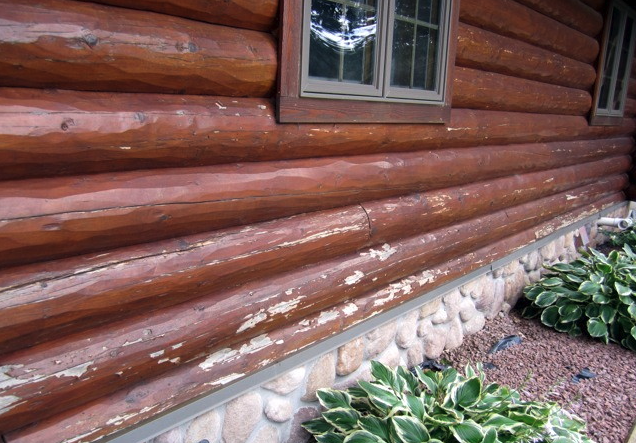
When inspecting a log home, the finish/coating gets evaluated for protection (water repellency, UV resistance, and adhesion), not just appearance.
What to look for
-
Loss of water repellency: Spray or splash water on several representative areas; a sound finish beads and runs off, while water soaking in indicates failure and exposed wood.
-
Fading and sheen loss: Heavily sun-exposed south and west walls often show dull, faded stain first; this typically means it’s due for a maintenance coat if other failures are not present.
-
Color unevenness on each log: Round logs commonly weather more on the upper half; pronounced shade difference (bleached top, darker bottom) is a red flag for UV and moisture exposure on the top radius.
-
Cracking, peeling, blistering: Any flaking, blistering, or obvious peeling of the stain/clear coat is considered failure and typically requires stripping and full refinishing, not just a maintenance coat.
-
Loss of adhesion: Do a simple scratch test with a fingernail or masking tape; if the coating scratches off easily or comes off on the tape, adhesion is compromised and the finish is failing.
-
Gray or dark discoloration of wood: Gray, weathered wood or darkening when wet points to UV degradation and loss of protection, often needing cleaning, surface prep, and new finish.
-
Biological growth and contamination: Note mold, mildew, algae, moss, or heavy dirt on log surfaces; these often occur where finish has thinned or failed and where moisture persists.
-
Film-build issues: Thick, non-breathable “plastic-like” films are more prone to blistering and peeling if moisture is trapped behind them; penetrating stains tend to erode rather than peel but still need periodic re-coating.
Practical field tests
-
Water-bead test: Lightly spray several sun-exposed and shaded elevations; if most of the test areas absorb water quickly, note “finish has largely lost water repellency; refinishing is recommended.”
-
Tape adhesion test: Apply painter’s/masking tape to representative spots, press firmly, then remove; finish coming off on the tape indicates poor adhesion or impending peeling.
-
Fingernail/scratch test: On visually “okay” areas, scratch with a fingernail; if you can easily lift or powder the stain, treat it as failed even if it only looks dulled.
Typical reporting points
-
Describe location and extent: Elevation, wall, and height where failure is observed (e.g., upper halves of south-facing logs, log ends, splash zones near grade).
-
Describe condition in plain terms: Note fading, loss of bead, gray/weathered wood, peeling or blistering, biological growth, and any bare wood exposed.
-
Recommend action, not product: Suggest evaluation and maintenance/refinishing by a qualified log-home finishing/restoration contractor, and advise regular annual inspections and cleaning thereafter.