
Inspecting log walls focuses on moisture, rot, movement/settlement, and insect/UV damage, inside and out.
Reporting focus for inspectors
- Identify general log wall type (handcrafted vs manufactured, presence/type of chinking) and overall condition.
Big-picture approach
- Walk each elevation separately, starting at a corner and circling the home.
- View walls from a distance first (global plumb/bulge/bow, finish uniformity), then close-up for probing and detailing.
- Give special attention to lower wall sections, corners, log ends, and any intersections with decks, roofs, or conventional framing.
Exterior wall essentials
- Clearance and splash-back: Verify at least about 12 inches from soil to lowest log, with no grade or landscaping in contact; look for splash-back staining or rot at lower courses.
- Finish and UV protection: Note peeling, failed, or thin stain, especially on south and west walls; check for greying wood, raised grain, and rough, fuzzy surfaces indicating UV/weathering.
- Checks and gaps: Identify large checks (commonly over about 1/4 inch) facing up or into weather that should be sealed, and look for widening gaps between courses or at corners.
- Chinking/caulk: Inspect continuity and adhesion along horizontal joints, at corners, and around openings; look for cracks, detachment, or stretched sealant creating air/water paths.
- Log ends: Probe and tap exposed log ends and protruding members for softness; pay attention to those beyond the drip line, which are prone to rot.[
- Deck and roof interfaces: Check flashing where decks, roofs, or balconies tie into log walls; lack of proper flashing at ledger boards or roof abutments is a common rot source.
Wall log profiles
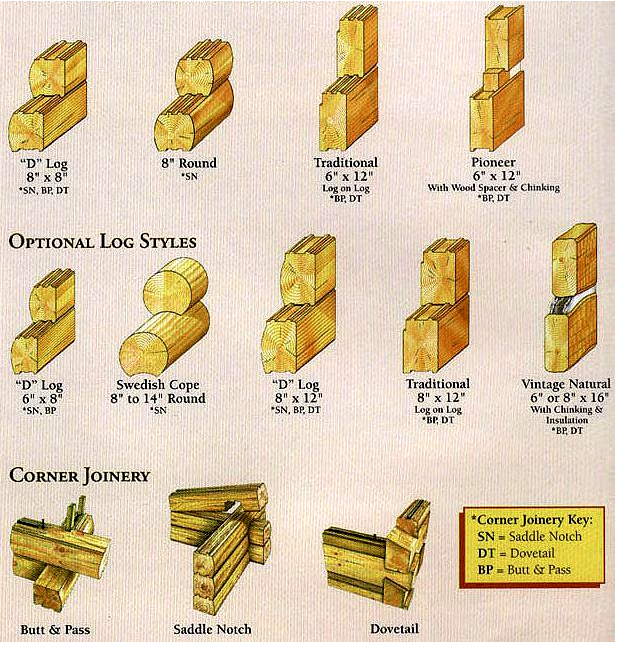
Detecting decay, insects, and structural issues
- Probing and sounding: Use a small hammer or screwdriver to tap and probe logs every few feet; a dull, hollow sound or easily penetrated surface indicates probable internal decay.
- Rot patterns: Concentrate on sill logs, logs under windows and doors, under decks, and below roof intersections where recurring wetting occurs.
- Insect activity: Look for frass, exit holes, carpenter ant trails, or galleries at checks and decayed areas, particularly in lower courses and near moisture sources.
- Movement/settlement: Note sagging or racked window/door openings, deformed trim, or cracking at wall intersections that may indicate differential settling or inadequate slip details between log and conventional walls.
Interior wall checks
- Light and air paths: In rooms where logs are exposed, look for visible light between courses, at corners, and where log walls meet partitions or ceilings, which indicates separation.
- Separation at interfaces: Check for gaps where interior partitions meet log walls and where ceilings or beams bear on log walls, especially in older or settling structures.
- Moisture tracing: Look for interior water staining following log joints or corners, which often corresponds to failed exterior chinking or flashing.
- Document specific defects: rot (location and extent), inadequate clearance, failed finishes, failed chinking/caulk, visible settlement-related separations, and missing/defective flashing at decks or roofs.
Recommend further evaluation or repair by log-home restoration specialists when you find significant decay, structural distortion, or widespread finish failure.