
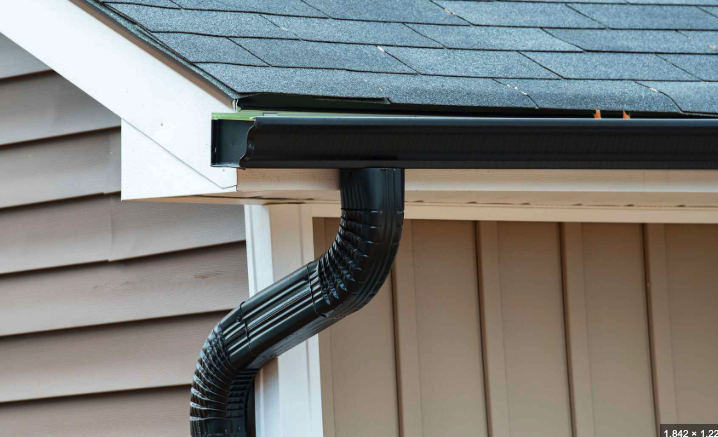
Residential roof drainage problems usually come down to design, installation, or maintenance issues with the roof plane, gutters, and downspouts.
Common drainage defects
Steep-slope
- Clogged gutters, scuppers, and drains from leaves, granules, and debris cause water to back up under shingles and into soffits and walls.
- Improper gutter slope or sizing results in standing water in gutters, frequent overflow, and ice buildup at the eaves.
- Downspout defects (clogged, damaged, disconnected, too few, or discharging too close to the house) cause water to overflow at the roof edge and collect at the foundation.
- Poor roof geometry or drain placement (drains in high spots, no crickets, long dead valleys) traps water in localized low areas.
Resulting damage and risk
- Foundation and site problems where uncontrolled drainage dumps water at the perimeter, contributes to settlement and basement/crawlspace moisture.
- Improper or deteriorated flashing can allow drainage to damage sheathing and/or drywall.
- Moisture-driven biological growth (mold, algae, moss) that degrades roofing and can create slip hazards.
Typical inspection red flags
- Lack of a drainage control system.
- Damaged drainage system components.
- Downspouts terminating at the foundation or onto lower roofs in a way that scours shingles or overwhelms lower gutters.
- Damaged or separated downspouts.
- Visible ponding on low‑slope areas that remains 48 hours after rainfall.
- Gutters full of debris, standing water, heavy staining or streaking on fascia and siding below the eaves, and eroded soil at drip lines.
- Damaged or improperly-sloped gutters.
- Interior ceiling stains beneath or near roof penetrations or changes in slope or pitch.
Prevention and correction themes
- Provide and maintain adequate slope on "flat" roofs.
- Configure roof slope to shed water (install crickets where necessary).
- Size and pitch gutters correctly, add sufficient downspouts, and keep all conveyance components clear with regular cleaning and guards where appropriate.
- Add downspout extensions where necessary.
- Ensure roof drains, scuppers, and strainers are properly located at low points, secured, and protected from debris, with overflow routes where required.
- Avoid downspout drain-ties where ice formation is possible.