
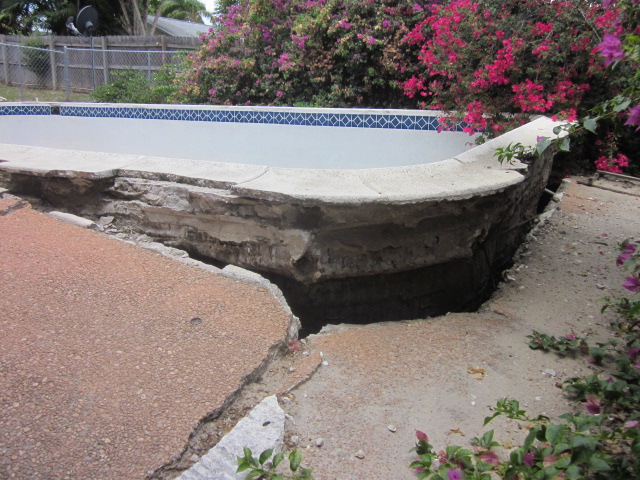
Inspecting a pool vessel (the shell/tank) focuses on structural movement, leakage, and finish failure, not just cosmetics.
Scope and limitations
- Treat it like any other "major component": visual, non‑invasive, no leak location guarantee.
- Define in your agreement that you are not pressure‑testing plumbing or certifying watertightness, only reporting visible conditions and indicators of possible leakage or movement.
Vessel types and what to look for
- Concrete/Gunite: Cracks (especially through‑plaster cracks that displace, step, or run continuously), rust staining (rebar bleed), hollow or delaminated areas, previous patches, and bond beam separation at the tile line or coping.
- Fiberglass: Bulges, buckling panels, long vertical cracks, gelcoat blisters, and distortion near steps/benches suggesting settlement or groundwater issues.
- Vinyl liner: Tears, seam separations, liner "ballooning" off the wall, rust or staining behind the liner, and obvious wall deformation that suggests corrosion of the steel wall system.
Indicators of structural movement or leakage
- Waterline not parallel with perimeter tile or coping, suggesting a tilted or settled tank.
- Cracks at the bond beam, corners, around skimmers, lights, returns, and steps; wider than hairline and/or with displacement are more suspicious for structural issues.
- Deck settlement, heaving, or separation from the beam, especially where the deck has dropped toward the pool or voids have opened at the interface.
- Chronic wet spots, algae or efflorescence in usually dry areas (back side of beam, under equipment slab, at retaining walls) that correlate with pool elevation.
As an illustration: if you see a continuous crack at the tile line with dropped deck sections and a low waterline on the same side, treat that as possible shell movement and recommend evaluation by a qualified pool contractor/engineer.
Practical vessel inspection sequence
- Observe water level relative to skimmer throat, tile, and typical operating marks, and ask occupants about refill frequency if available.
- With circulation off for a few minutes, scan the shell from coping down: note cracks, patches, hollow‑sounding spots (light tapping with plastic tool if within your SOP), spalling, exposed steel, and finish loss.
- Pay special attention around penetrations (skimmers, main drains, lights, returns, steps, ladders) where structural and plumbing leaks are common.
- Inspect the surrounding deck, retaining walls, and adjacent structures for settlement or movement that could impact the vessel.
Reporting language ideas (conceptual)
- Describe, don't diagnose: "Cracking and displacement observed in the concrete pool shell at the deep‑end wall and bond beam. Cause and extent not determined."
- Connect risk: "Observed conditions may indicate structural movement and possible leakage. Pool shell, beam, and adjacent deck should be further evaluated and repaired as needed by a qualified pool contractor; leakage testing may be required."