
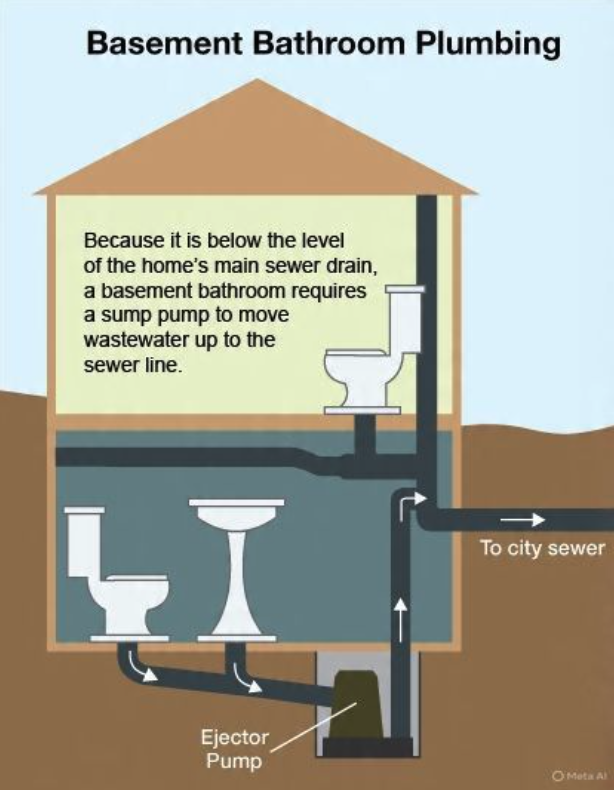
A sewage ejector in a residential setting is inspected primarily for safety, sanitation, and obvious performance issues, not for detailed serviceability testing.
Scope and limitations
For a standard home inspection, you typically:
- Identify the presence and general type of sewage ejector pump (or note if fixtures below grade lack one where expected).
- Operate normal controls only (e.g., run a basement bathroom or drain) rather than dismantling the system or entering the pit.
What to locate and document
- Location of the basin relative to basement fixtures served.
- Type of system: sewage ejector vs sump pump vs combination, and which fixtures appear tied in.
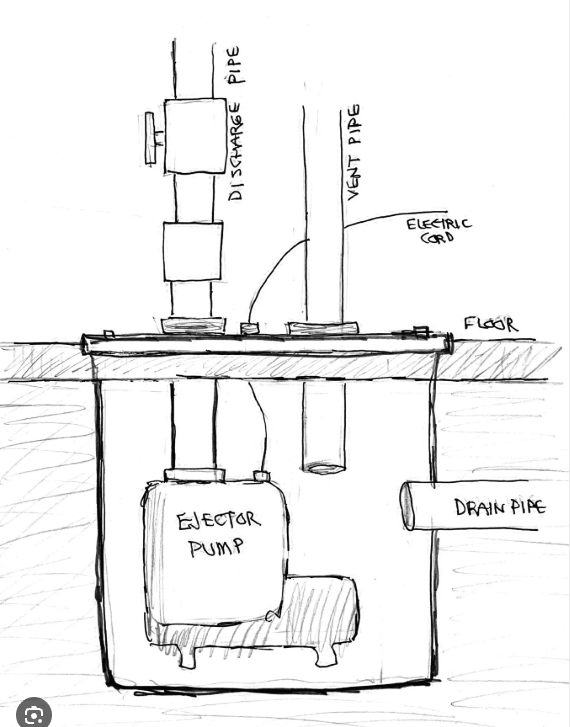
- Accessibility: ability to view the lid, discharge, vent, and electrical connections without removing covers.
- Vent hooe
Visual inspection items
Without opening the sealed pit, you generally check:
- Basin lid: sealed, bolted or screwed down, gas‑tight grommets around penetrations, no obvious cracks or gaps.
- Vent: presence of a vent line sized and run like a standard plumbing vent (not capped, not run to interior only).
- Discharge piping: correct material for drain/waste, supported, with a visible check valve and shutoff where accessible.
- Electrical: dedicated receptacle or hard‑wired circuit where visible, cord intact, no open splices, no extension cords or multi‑tap adapters.
- Signs of leakage: staining around the lid, dampness, effluent on or around the pit, or corrosion on nearby materials.
- Alarm (if present): float alarm box or panel, mounted above grade, with visible indication it has power.
Functional checks
Using plumbing fixtures that discharge into the basin:
- Run water and observe that the pump cycles on and off within a reasonable time, without tripping breakers.
- Listen for abnormal noise (grinding, rattling, harsh cavitation) and excessive vibration transmitted to the discharge piping.
- Observe accessible discharge for hammering, leaks at fittings, or obvious movement when the pump starts and stops.
- Note any backup, slow drainage, or gurgling that suggests venting or capacity problems.
Common defects to write up
- Basement bathroom or laundry below the main sewer line with no visible ejector system.
- Unsealed or loosely covered basin, missing gaskets, or open penetrations that could leak sewage or sewer gas.
- No apparent vent, or vent terminated indoors or capped.
- No check valve on the discharge where a vertical lift is present.
- Evidence of past overflow or chronic leakage around the pit or adjacent finishes.
- Pump that fails to run, runs continuously, or trips the breaker during normal fixture use.
- System sharing a circuit inappropriately, powered through an extension cord, or lacking any form of alarm in a larger or commercial environment (note and recommend evaluation).