
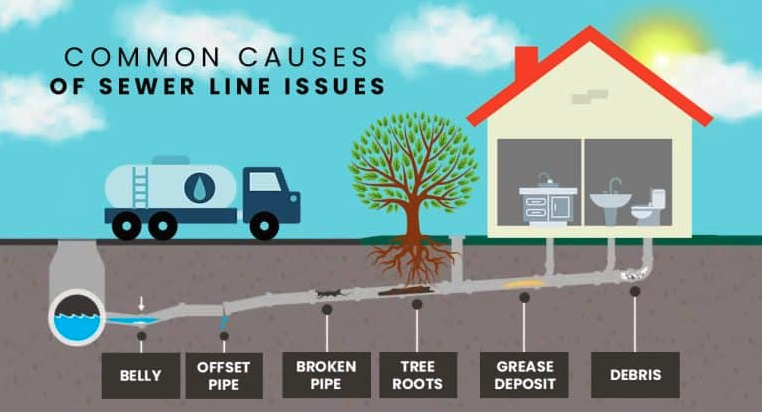
Certain house and site conditions are strong indicators that a sewer scope is advisable, and in some cases,
Plumbing symptoms in the home
- Repeated sewage backups into tubs, showers, floor drains, or lower-level fixtures, even after snaking/clearing.
- Multiple fixtures draining slowly at the same time (not just one sink or trap).
- Gurgling sounds from drains or toilets, especially when other fixtures are used or after flushing.
- Persistent sewer or foul odors at drains, in the basement/crawlspace, or near where the building sewer exits.
Site and exterior red flags
- Localized soggy soil, standing water, or a sunken trench/sinkhole along the suspected sewer line path.
- Isolated, unusually lush or very green strip/patch of grass or vegetation over the sewer path compared to surrounding lawn.
- Evidence of rodents or other pests around the structure or along the sewer route, especially when paired with plumbing issues.
Age, materials, and vegetation
- Homes built before about 1980, and especially pre‑1970 stock, where clay, cast iron, Orangeburg, or other older materials are likely.
- Any older home (roughly 40+ years) that has never had the sewer lateral replaced or evaluated.
- Large, established trees or dense root systems near the building sewer alignment, even if there are no current symptoms.
Structural or site movement
- Noted foundation movement, settlement, or soil shifting in the yard, especially in expansive soils or areas with prior ground movement.
- Observed depressions, heaving, or cracking in driveways or walkways that appear to follow the sewer line route.
Transaction and risk-based triggers
- Any home purchase where repairs would be intrusive and expensive (older urban infill, long laterals to the street, lines under driveways/trees).
- Prior history disclosed by the seller of sewer backups, line repairs, or root intrusions, even if “fixed.”
- Situations where a missed defect could be a major financial hit for the buyer (examples of first‑day backups and very costly repairs are well documented).
Practical rule of thumb (for your templates)
Recommend a sewer scope when:
- House is older (pre‑1980 or 40+ years) or has known legacy materials,
- There are ANY recurring plumbing symptoms (backups, slow drains, gurgling, odors),
- There are site clues (lush strip, soggy trench, sinkholes, rodent activity, large trees along line), or
- It’s a real estate transaction where sewer access/repairs would be costly or disruptive.
You can then phrase it in your report as a risk‑management recommendation rather than strictly defect-based, especially in older housing stock.