
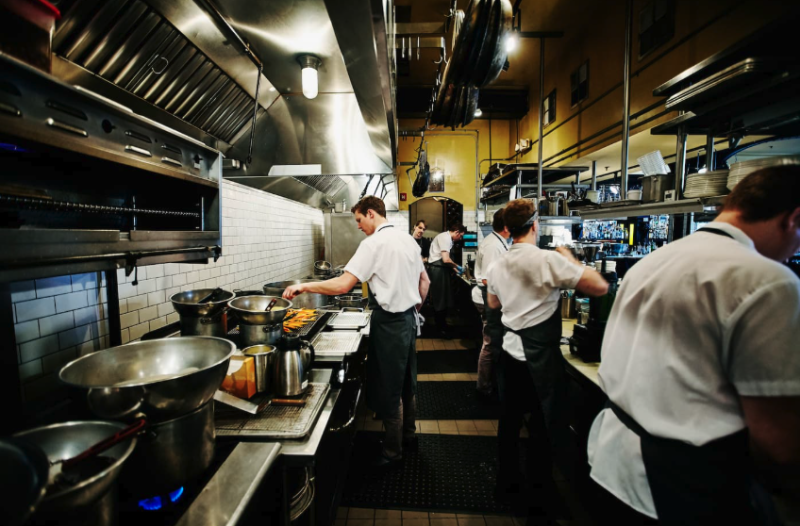
Visual-only Inspection of a Commercial Kitchens
Below is a narrative-style list of potential deficiencies aligned with each item on your checklist, written for a visual-only commercial-kitchen inspection. You can drop in, delete, or modify sentences as needed and adjust tense/voice to match your report style.
General facility
- Overall housekeeping and visible sanitation conditions in the kitchen appeared substandard, with accumulations of debris, soil, or clutter observed in work areas and under or behind equipment.
- The workflow between storage, preparation, cooking, and ware-washing areas did not appear clearly separated, increasing the potential for cross-contamination and work inefficiencies.
- Slip, trip, and fall hazards were observed in the kitchen, including wet, greasy, uneven, or obstructed walking surfaces in active work areas.
- Aisle widths and working clearances around equipment and workstations appeared limited in some locations, which may restrict safe movement of staff and equipment.
- Evidence of deferred maintenance or physical damage was noted at visible building components or equipment surfaces, indicating a need for repair and upkeep.
- Evidence of prior leaks, staining, or moisture intrusion was observed at ceilings, walls, floors, or around plumbing/equipment, suggesting past or ongoing moisture issues.
- Designated permit or posting areas were not clearly visible or were missing required postings in the kitchen or adjacent service areas, where such postings are typically expected.[1]
Cold and hot holding
- One or more reach-in or walk-in refrigeration/freezer units did not appear to be operating normally at the time of the inspection (inoperative, excessively warm, iced up, or otherwise suspect based on visual conditions only). No performance testing was performed.
- Thermometers were not clearly visible inside some refrigeration or freezer units, limiting the ability of staff or inspectors to visually verify temperatures.
- Refrigerator or freezer doors, gaskets, and latches showed damage, incomplete sealing, or poor alignment, which may impact efficiency and temperature control.
- Excessive ice buildup or condensate accumulation was observed in or around refrigeration equipment, suggesting potential maintenance or performance concerns.
- One or more hot holding units did not appear to be operating when observed, or visible conditions suggested possible performance or maintenance needs. No food or equipment temperatures were measured as part of this visual inspection.
- Temperature logs, where typically maintained, were not available, incomplete, or not clearly posted at the time of inspection.
Cooking equipment
- One or more ranges or cooktops did not appear to be in typical serviceable condition based on visible indicators (damage, missing parts, or obvious non-operation) at the time of inspection.
- Ovens or combi ovens showed visible signs of disrepair, incomplete installation, or apparent non-operation, suggesting a need for service or further evaluation.
- Fryers did not appear fully stable, properly guarded, or well-supported, and visible conditions suggested that tipping, movement, or impact damage could be a concern.
- Griddles or charbroilers displayed visible damage, soiling, or installation issues that may affect safe operation or cleanability.
- Cooking equipment in general did not appear easily cleanable or well-maintained, with heavy grease, soil accumulation, or obstructed access noted at some surfaces and support areas.
- Obvious gas leaks were not tested for, but visible concerns such as damaged connectors, unsupported gas piping, or improvised/unsafe electrical connections were observed at one or more appliances.
- Required clearances to combustible materials or adjacent surfaces around heat-producing equipment did not appear to be consistently maintained based on visible conditions.
Hood and exhaust
- A Type I hood was not present over some grease-producing equipment where such hoods are commonly expected in commercial kitchens, or the installed hood did not obviously align with visible equipment configurations.
- The hood canopy appeared damaged, loose, or not securely mounted to surrounding construction, indicating a need for further evaluation and repair.
- Grease filters or baffles were missing, incorrectly seated, heavily soiled, or otherwise not maintained as expected for effective grease capture.
- Visible grease accumulation was noted on the hood, filters, adjacent walls, or exposed duct surfaces, suggesting that cleaning or maintenance intervals may be inadequate.
- Make-up air for the hood system did not appear to be present or obviously operating where typically expected, based on visible louvers, registers, and airflow cues only.
- Exhaust fan operation could not be confirmed, or when observed, the fan and associated components displayed visible deficiencies (noise, vibration, damage, or apparent non-operation).
- Hood light fixtures or protective lens covers were missing, damaged, or not operating, reducing lighting and potentially exposing food areas to broken-glass risk.
- Service tags or cleaning stickers for the hood and exhaust system were missing, illegible, or appeared out of date based on visible dates and labels.
Fire and life safety
- An automatic hood suppression system was not observed over grease-producing equipment where such systems are commonly expected, or the visible system did not appear complete.
- The manual suppression pull station was not clearly visible, not labeled, obstructed, or not readily accessible to staff.
- The hood suppression system inspection or service tag appeared missing, illegible, or past due based on visible dates.
- A Class K fire extinguisher was not present in the vicinity of the cooking line where such extinguishers are commonly expected for grease fires.
- Portable fire extinguishers were missing, not securely mounted, lacked visible charge/pressure, or displayed missing/outdated tags based on visual inspection only.
- Emergency egress paths, including access to exit doors, appeared partially obstructed by equipment, storage, or other items at the time of inspection.
- Alarm, emergency shutoff, or other emergency controls were not clearly identified, labeled, or readily accessible where visible.
Plumbing and sinks
- Handwashing sinks were not provided in practical locations throughout the kitchen, or staff access appeared limited due to distance or obstructions.
- One or more hand sinks did not appear to be supplied with hot and cold running water based on visual operation at the time of inspection.
- Handwashing stations lacked required soap, towels, or other approved drying methods at the time of inspection.
- A three-compartment sink was not present where such warewashing provisions are commonly expected, or the installed sink configuration did not support the standard wash–rinse–sanitize process.
- The pre-rinse assembly, faucets, or related components displayed visible leaks, damage, or loose mounting that may affect safe and reliable operation.
- Floor sinks, floor drains, or other drainage points appeared slow-draining, obstructed, or otherwise not visibly functional.
- Active leaks were observed at fixtures, supply lines, traps, or waste piping during the time of inspection.
- Backflow prevention or cross-connection control devices were not clearly visible where typically expected on certain fixtures or equipment connections.
- Evidence of grease interceptor or grease trap maintenance (such as tags, logs, or accessible clean-out conditions) was not clearly available, or visible conditions suggested possible maintenance neglect.
Warewashing and utensils
- A dish machine, where present, did not appear to be installed or operating normally, or was visibly out of service during the inspection. No sanitizer concentration or temperature testing was performed.
- The physical layout and equipment did not clearly support a complete three-step warewashing process (wash, rinse, sanitize) where such a process is commonly required.
- Sanitizer test materials, such as test strips, were not readily available near warewashing areas at the time of inspection.
- Food-contact utensils, dishes, or smallwares exhibited visible soiling, poor storage practices, or unprotected exposure to splashes and contaminants.
- Damaged utensils, chipped or deeply scored cutting boards, or other compromised food-contact surfaces were observed in use or stored for use.
- Adequate space for air-drying of cleaned items was not clearly provided, resulting in stacked or congested drying conditions.
Electrical and lighting
- Lighting in portions of the kitchen appeared inadequate for typical food preparation and cleaning tasks, based on observed brightness and coverage only.
- Light fixtures over food and prep areas were missing protective coverings or shields where such protection is commonly expected.
- Receptacles, switches, or disconnects showed visible damage, loose covers, missing plates, or other conditions suggesting they were not fully serviceable.
- Exposed conductors, open junction boxes, or unsafe extension cord use were observed in the kitchen or at equipment locations.
- Some equipment appeared to be connected using non-professional, improvised, or non-permanent wiring methods rather than fixed, professionally installed connections.
Floors, walls, ceilings
- Kitchen floors showed visible damage, cracks, missing sections, or heavy soil accumulation, and did not appear fully cleanable or well maintained.
- Floor-to-wall transitions did not appear to be coved or easily cleanable in some locations, which can hinder sanitation.
- Walls and splash surfaces in food-prep and warewashing areas showed visible damage, open seams, non-washable finishes, or heavy soiling that may affect cleanability.
- Ceiling surfaces above food and equipment areas were not fully intact, with loose materials, staining, or other defects that could result in debris or moisture falling into work areas.
- Evidence of mold-like growth or water damage was observed on floors, walls, or ceilings, suggesting prolonged moisture conditions and the need for evaluation and correction by appropriate specialists.
Restrooms and handwashing support
- Restrooms serving the kitchen or food-facility staff were not clean or fully operational at the time of inspection, based on visible conditions.
- Self-closing devices on restroom doors did not function properly where such doors are expected to be self-closing.
- Required handwashing signage was not posted near hand sinks in restrooms or staff areas.
- Soap, towels, or toilet tissue were not adequately stocked in one or more restrooms.
- Restroom exhaust or other ventilation provisions did not appear to be operating or were not clearly present where typically expected.
Pest and refuse conditions
- Visible evidence of rodent or insect activity (such as droppings, nesting materials, or insects) was observed in the kitchen or adjacent storage/refuse areas.
- Exterior doors did not close properly or displayed gaps at thresholds and sides, which can allow pest entry.
- Screens, air curtains, or other pest-exclusion devices were not present or not operating where such devices are commonly used at exterior openings.
- Interior trash containers were not leak-resistant, not covered where expected, or were not maintained in a clean condition.
- The exterior refuse area showed accumulations of waste, spills, or general lack of maintenance that may attract pests or create sanitation concerns.
- Dumpster lids or covers were left open or were damaged where observed, reducing pest and odor control.
Personnel and practices
- Food handler or manager certification documentation was not posted or readily available for review at the time of inspection.
- Employees observed during the inspection did not consistently use handwashing stations in a manner typically expected for food safety.
- Hair restraints or appropriate clean garments were not consistently used by staff engaged in food preparation where such practices are commonly expected.
- Employee personal items were stored in or above food-preparation or storage areas, creating potential for contamination.
- Tobacco use or related products were observed within the food facility where such activities are generally prohibited.
Scope and limitation language (optional narrative)
- This inspection was limited to visible and readily accessible areas and components of the commercial kitchen and did not constitute a code compliance certification, sanitation test, hood-balance test, fire-suppression acceptance test, or destructive evaluation.
- Any concerns identified regarding hood or suppression systems, gas or electrical safety, drainage or grease interceptors, refrigeration performance, sanitation practices, pest activity, or jurisdictional permits should be further evaluated and addressed by the appropriate licensed contractors, service providers, or authority having jurisdiction.